
Two Texas markets.
Two very different waters.
In Midland the city publishes hardness at 400 to 600 parts per million — two to three times what the trade already calls “very hard”. Up in Dallas–Fort Worth it is lake water, moderately hard, and much of the north metroplex runs on chloramine rather than chlorine. Different problems, different systems. We build both, and the free test at your own sink says which is yours.
- Free in-home water test
- Exact price up front
- Midland and DFW
- Installed by us
Start here
What’s actually in your water?
Put in your ZIP and we’ll tell you who supplies your water, where it comes from and what your utility publishes about it — before anyone calls you.
Why this matters
You already know something’s off with your water
Most people don’t call us because they read a water quality report. They call because of one of these four things.
Spots on everything
Glasses come out of the dishwasher cloudy. Shower doors film over days after you clean them. That's dissolved calcium left behind when hard water evaporates.
Skin and hair feel wrong
Soap doesn't rinse off properly in hard water, so it sits on your skin. Dry, itchy skin and flat, brittle hair are the most common complaints we hear.
Your water heater is dying early
Scale builds up on the heating element and insulates it, so the heater burns more energy to do less. Hard water can take years off its life.
It tastes like a pool
Chlorine is added to keep city water safe on the way to your house. It does its job — it just doesn't taste good in coffee.
Our systems
Built for the water you actually have
City water and well water are different problems. A 2,000 sq ft home and a 5,000 sq ft home are different problems. We size the system to your house, not to a price list.
Our most installed systemWhole-Home Softener + Filtration
The system most Permian Basin homes need, and most DFW homes want.
A softening tank with a carbon layer and its own brine tank, plumbed in where the water enters the house so every tap, shower and appliance sits downstream of it. The resin takes out the calcium and magnesium that scale your water heater, spot your glassware and stop soap rinsing. The carbon takes out the chlorine taste and smell. In Midland, where the city publishes hardness at 400 to 600 parts per million, this is the system that changes a house.
Best for: Any home on hard water - which in the Permian Basin is effectively all of them
Details and specs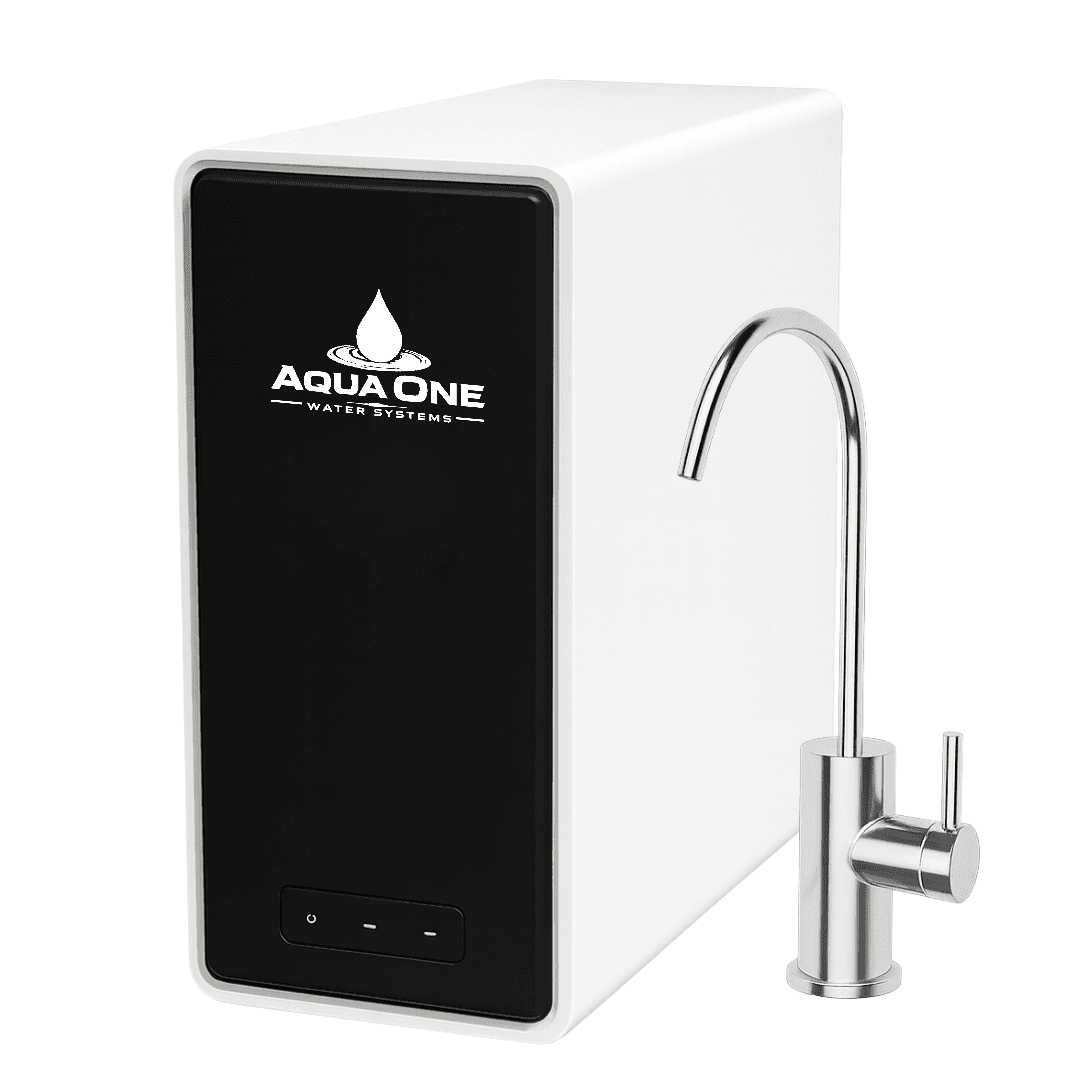 The one people notice first
Tankless Reverse Osmosis
The glass of water you actually want to drink.
A softener handles hardness and carbon handles taste. Reverse osmosis handles what neither is built for - the dissolved solids, which in West Texas groundwater is the number that makes water taste the way it does. It sits under the kitchen sink with its own faucet, takes up no cupboard space, and it is the change people comment on the first morning: in the coffee, in the ice, and in a plain glass of water. It also ends the bottled-water habit.
Best for: Every home, and anyone still buying bottled water
Details and specs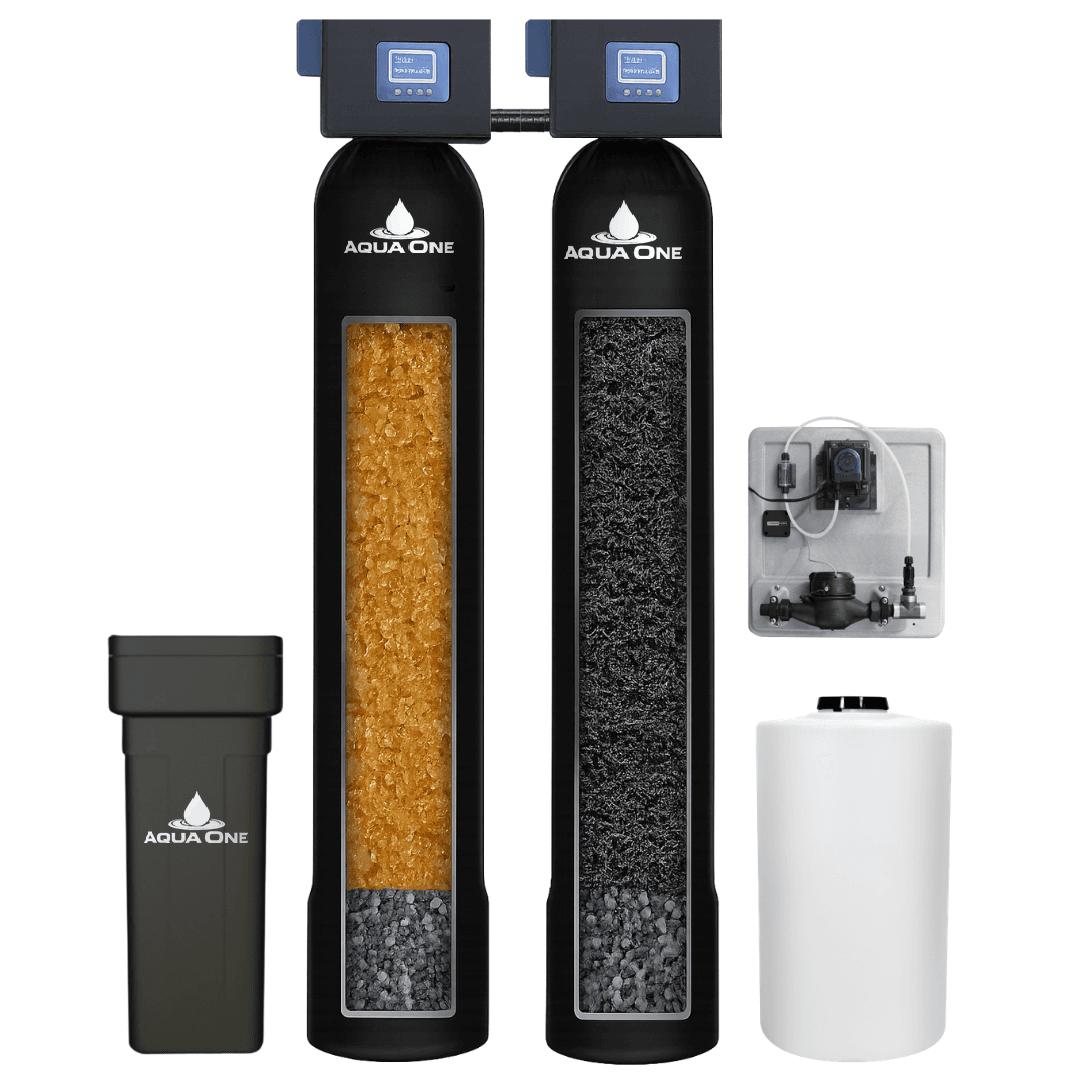
Well Water Treatment
For every home drawing its water straight out of the ground.
Out past the city limits - Greenwood, Gardendale, Stanton, Seminole, and the country south of DFW - a great many homes are on their own well, and nobody is treating that water before it reaches the house. A well brings hardness and iron as standard, and often a rotten-egg sulfur smell that a softener will never fix. This is a staged build: oxidize and filter the iron and sulfur first, then soften, then UV if bacteria have ever shown up. The order matters, because a softening resin bed fouled with iron is an expensive thing to replace.
Best for: Private wells anywhere in either service area
Details and specsWhole Home Systems
Softening for the hardness, carbon for the chlorine, and staged builds for well water. Installed where the water enters the house, so every tap is downstream of it.
View systemsDrinking Water Systems
Reverse osmosis at the kitchen sink - the upgrade every household notices first. Better coffee, better ice, and no more buying bottled water.
View systems
Add Ons
The layer that finishes a well build, and the pieces that make a system complete.
View systemsOur work
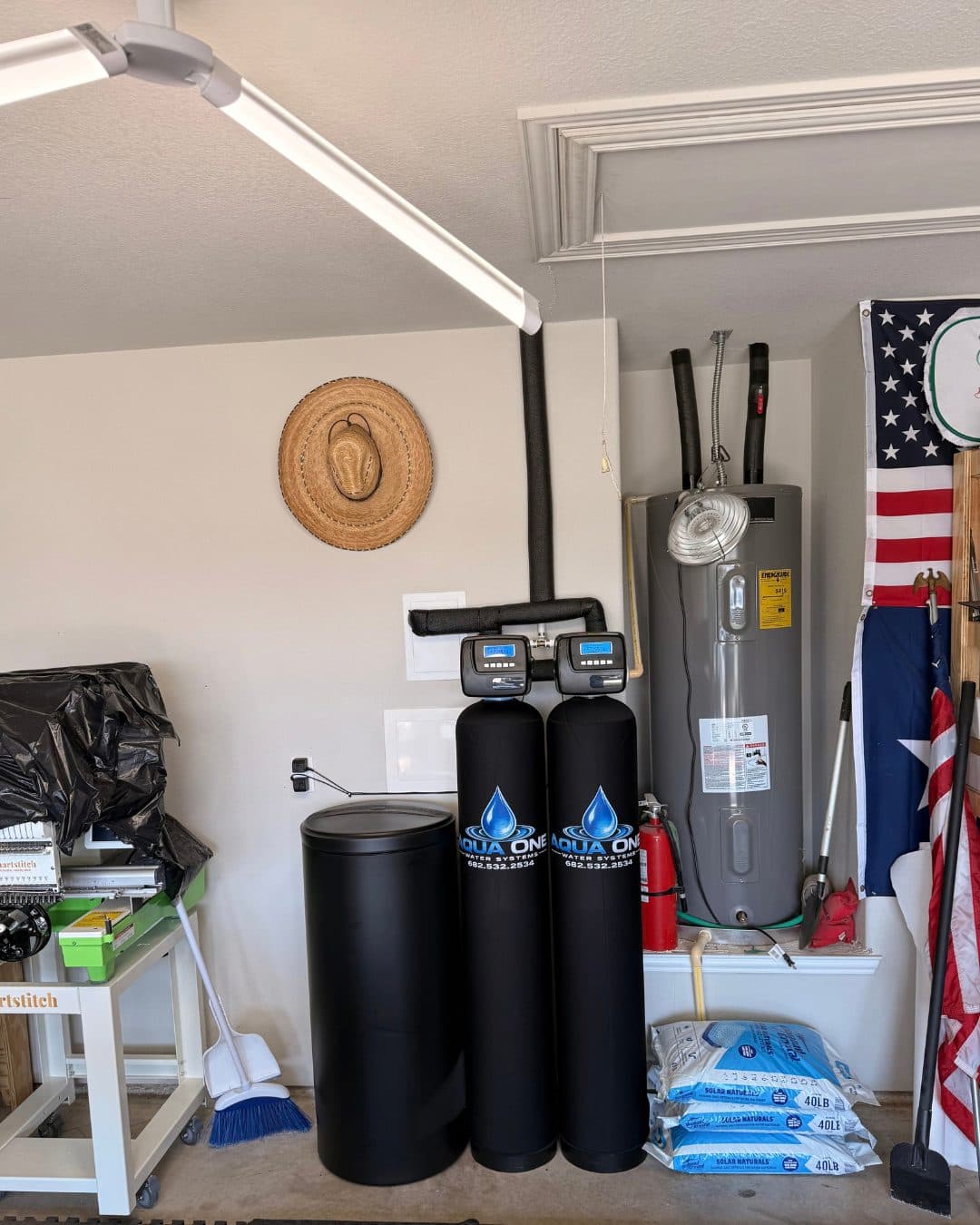
The same corner of the same garage
Not a stock photo. This is a Permian Basin home before we arrived and after we left - water heater untouched, softener and carbon filtration plumbed in where the water enters the house, and the salt stacked where the homeowner can reach it.
 Before
 After
After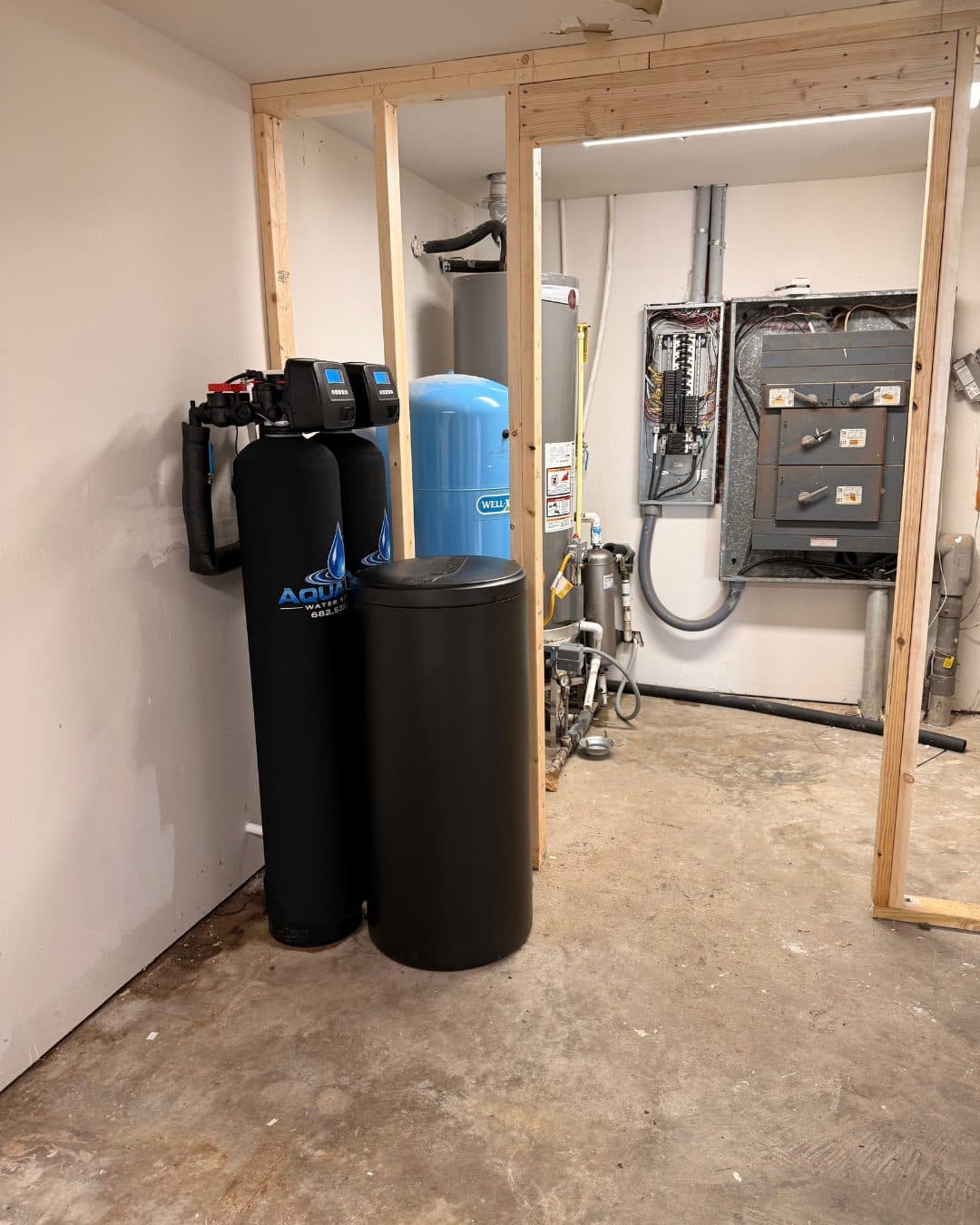
And when the house is on a well
Different job entirely. This one sits beside the pressure tank and the well pump, because on a private well nobody is treating the water before it reaches you. Iron and sulfur have to come out first, in that order, before anything is softened - put the softener first and you foul the resin bed.
How we build a well systemHow it works
Four steps, and the first two are free
We’d rather tell you that you don’t need a system than sell you the wrong one. That’s a strange thing for a salesman to say, and it’s the whole idea behind this company.
- 1
We test your water, at your sink
Free, on site, takes about fifteen minutes. You see the result yourself — we're not emailing you a PDF later.
- 2
We tell you what it means
Hardness, chlorine, iron, whatever's there. In plain terms, with what it's doing to your plumbing and skin, and what happens if you do nothing.
- 3
We size the right system
Based on your water, your household size and where the equipment can go. Not on what we'd most like to sell.
- 4
We install it
Usually a half day, and we clean up after ourselves. You know the full price before we start — there is no number on install day that wasn’t on the quote.
What your water actually is
- 400-600ppm
- Total hardness the City of Midland publishes for its own water. Divide by 17.12 and that is roughly 23 to 35 grains.
- 2markets
- The Permian Basin and Dallas-Fort Worth. Different water, different builds, one company that knows both.
- 0dollars
- What the in-home water test costs, whether or not you buy anything.
Our story
“I test it at your sink, and you read it with me.”
Water is the one thing in a house that touches everything — the shower your kids stand in, the glass on the nightstand, the coffee, the ice, the laundry against your skin all day. Almost nobody thinks about it, because it never asks to be thought about.
In Midland it asks. The city publishes its own hardness at 400 to 600 parts per million, which is two to three times what the industry already calls very hard, and you can see what it does to a water heater. Three hundred miles away in Dallas–Fort Worth the water comes off the lakes instead, moderately hard, and the thing people notice there is the taste of the disinfectant rather than the scale.
Same trade, two completely different jobs. So I test first, at your own sink, and you read the result standing next to me. Then I build the system your water actually calls for — and I tell you what it costs before you decide anything.
Where we work
Nineteen counties, worked out of Midland
We’re in Midland, and we work outward from there — from Clarksville down to Winchester, and from Dickson across to Cookeville.


Questions
The things people ask us
Anything we haven’t covered, just call. We don’t use a phone tree.
How hard is the water in Midland?
Extremely. The City of Midland publishes total hardness of 400 to 600 parts per million, and tells you to divide by 17.12 to get grains per gallon - which puts Midland somewhere around 23 to 35 grains. For context, the water industry calls anything over about 10 grains 'very hard'. Midland is two to three times that. It is why water heaters here fail early, why glassware never comes out clear, and why soap will not rinse off your skin.
Is DFW water the same?
Not remotely, and that is worth knowing if you have moved between the two. Dallas-Fort Worth runs on surface water from the lakes, and it is moderately hard rather than extreme. The North Texas Municipal Water District, which supplies Plano, Frisco, McKinney, Allen, Garland and others, describes its own water as moderately hard because of the minerals in Lavon Lake. The bigger difference is the disinfectant: NTMWD uses chloramine rather than plain chlorine, and chloramine does not gas off if you leave a jug on the counter. It takes a proper carbon bed to remove.
What does a system cost?
It depends on your water, the size of the house and where the equipment can go - so we do not put one number on a website and then change it in your kitchen. Call us and we will talk it through, and the free in-home test turns it into an exact number for your house before you decide anything.
Do I need a softener, a filter, or both?
They fix different things and plenty of homes want both. A softener removes the calcium and magnesium that cause scale, spotting and that film on your skin. Carbon filtration removes the chlorine or chloramine behind the taste and the smell. In Midland the hardness is the headline and a softener is the obvious first move. In DFW it is more often the taste, which points at carbon plus reverse osmosis at the kitchen tap. If you are on a well, iron and sulfur usually come first, and that is a genuinely different build.
My well water smells like rotten eggs. Will a softener fix it?
No, and this is the most common mistake in this industry. That smell is hydrogen sulfide, and a softener does nothing to it - it passes straight through the resin. It has to be oxidized out first, which is exactly what the well system is built to do. If somebody quotes you a softener for a smell problem, get a second opinion.
You cover Midland and Dallas-Fort Worth. Is that really one company?
Yes, and it is deliberate. They are two of the most different waters in Texas - deep West Texas groundwater on one end, lake water on the other - and knowing both properly means we are not trying to sell the same system in two places where it does not fit.
Free water test
Find out what's actually in your water
We'll test your water at your kitchen sink, show you the result, and tell you what — if anything — you need. Free, and there's no system that fits every house.
- Free in-home water test
- Exact price up front
- Locally owned